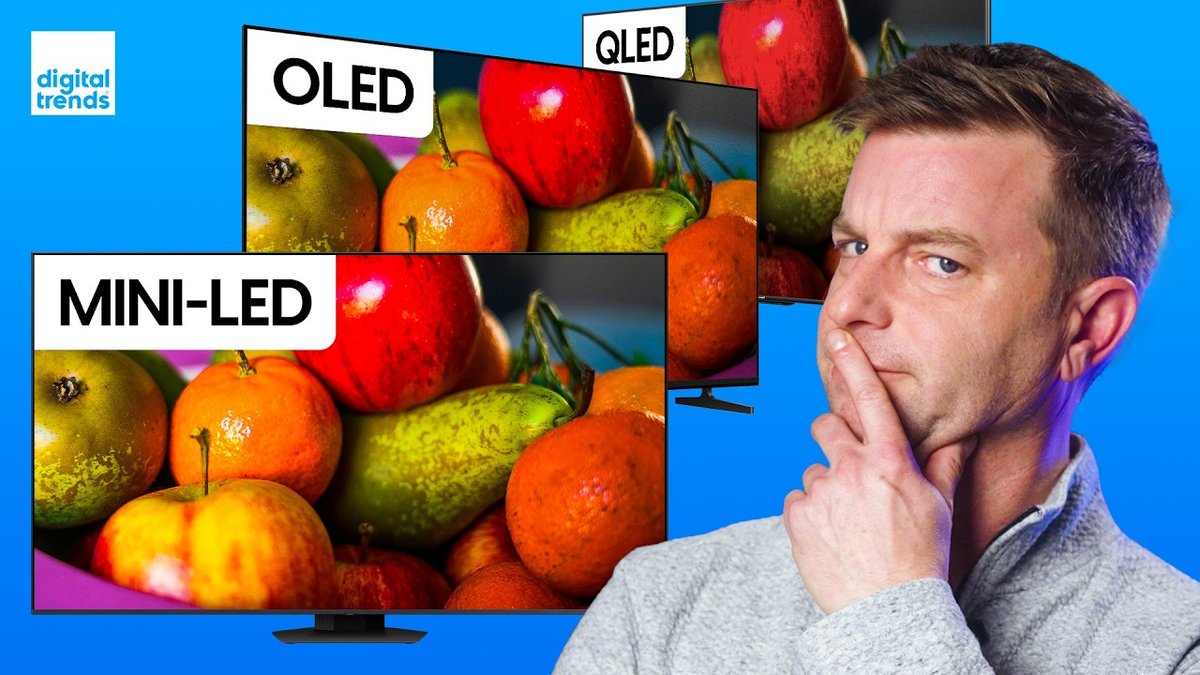
In the dynamic world of home entertainment, choosing a new television can feel less like a shopping trip and more like navigating a dense jungle of acronyms. You're likely here because you’re wrestling with the big question: OLED vs. QLED vs. Mini-LED: A Comprehensive Comparison. Which technology truly delivers the best picture for your hard-earned money and, more importantly, for your living room?
Forget the marketing hype for a moment. As a seasoned observer of the display landscape, I've seen technologies come and go, each promising the moon. The truth is, there’s no single "best" TV for everyone. What might be cinematic perfection for one viewer could be a washed-out disappointment for another. Your ideal TV experience hinges on three crucial factors: your Budget, your room’s Brightness, and how much you value absolute Black Levels.
This guide cuts through the noise, laying out the unvarnished truth about each display technology, where they shine, and where they fall short. By the end, you'll have a clear roadmap to the TV that genuinely suits your home and viewing habits.
At a Glance: Your Quick Tech Decoder
Before we dive deep, here’s a rapid-fire overview to set the stage:
- LED LCD (The Foundation): The most common and affordable. Uses a single backlight. Good for general viewing, but struggles with contrast (blacks often look grey). "Full Array Local Dimming" (FALD) improves this significantly.
- QLED (Brightness & Color King): An enhanced LED LCD that uses "Quantum Dots" for hyper-vibrant colors and extreme brightness. Ideal for bright rooms, daytime viewing, and resisting screen burn-in.
- OLED (Contrast & Cinematic Champion): Each pixel is its own light source, allowing for perfect blacks and infinite contrast. Unrivaled for dark-room viewing, color accuracy, and gaming response times, but can be susceptible to burn-in with static images.
- Mini-LED (The Evolution of Brightness): A sophisticated form of LED LCD that uses thousands of tiny LEDs for backlighting. Delivers much better contrast and brightness than standard LED LCD, bridging the gap between QLED and OLED. A strong all-rounder.
The Foundation: Understanding LED LCD and Its Evolution
Before QLED and Mini-LED entered the scene, virtually all flat-panel TVs were (and many still are) variations of the LED LCD display. Understanding this baseline is crucial because both QLED and Mini-LED are, at their core, advancements built upon LED LCD technology.
An LED LCD TV operates by shining light through a layer of liquid crystals. Think of these crystals as tiny shutters: they open or close to let light pass through or block it, forming the image. The light source itself comes from a large array of LEDs positioned either along the edges or directly behind the screen.
Why LED LCD is Ubiquitous: It's a relatively inexpensive and efficient technology to produce, making it the bedrock of the affordable TV market. You’ll find countless models, often priced well under $1,000, that fit perfectly into spare rooms, kitchens, or kids' playrooms.
The Achilles' Heel: The primary challenge for traditional LED LCD TVs lies in their backlighting. When you have a single, large backlight array illuminating the entire screen, it's difficult to create true, inky blacks. If one part of the screen needs to be black while an adjacent part is bright, light tends to "bleed" into the dark areas, resulting in muddy grey tones rather than deep black. This limitation directly impacts contrast, making scenes feel flatter.
Enter Full Array Local Dimming (FALD): To combat this, manufacturers developed Full Array Local Dimming (FALD). Instead of one uniform backlight, FALD systems divide the screen into dozens, or even hundreds, of individual "dimming zones." Each zone can be independently brightened or dimmed, allowing for much more precise control over light. This significantly improves contrast and black levels, reducing light bleed without requiring a massive price jump. If you’re considering an LED LCD, FALD is a feature worth seeking out.
The Rise of QLED: Brutal Brightness Meets Explosive Color
QLED isn't a fundamentally different display technology from LED LCD; rather, it’s a powerful enhancement. The "Q" stands for Quantum Dot. Imagine microscopic nanocrystals, invisible to the naked eye, placed in a film between the LED backlight and the LCD layer. When light from the LEDs hits these Quantum Dots, they glow with incredibly pure, vivid colors.
The Core Benefits of QLED:
- Explosive Color: Because Quantum Dots can emit light at very specific wavelengths, QLED TVs achieve a significantly wider color palette than standard LED LCDs. Colors appear more saturated, vibrant, and true to life, making content pop off the screen.
- Brutal Brightness: This is where QLED truly shines, literally. These TVs can reach incredibly high peak brightness levels, far surpassing what OLED panels can typically achieve. This isn't just about making your content look bright; it's about actively combating ambient light. If you have a sunny living room with large windows, a QLED TV will slice through sun glare and prevent your picture from washing out, delivering a watchable, vibrant image even in the brightest conditions. For many, especially those who do most of their viewing during the day, this brightness is more critical than absolute black levels.
Durability and Longevity: QLED technology, being an evolution of LED LCD, inherits its robust nature. It is resistant to screen burn-in – the permanent retention of a static image – and typically boasts an impressive lifespan, often rated up to 100,000 hours. This makes QLED an excellent choice for those who might display static content for long periods, like news channels with tickers, computer monitors, or video game interfaces.
OLED: The Gold Standard for Cinematic Perfection
OLED, or Organic Light Emitting Diode, stands apart from its LCD-based rivals. Instead of using a backlight to illuminate crystals, each individual pixel in an OLED display is its own light source. This means every single one of the millions of pixels can turn completely on or off independently.
The Unrivaled Benefits of OLED:
- Perfect Contrast & True Blacks: This is OLED's undisputed killer feature. When an OLED pixel is off, it's off. There's no residual light, no light bleed, just absolute black. This allows for an infinite contrast ratio, where the brightest whites can sit directly next to the deepest blacks without compromise. The result is a stunningly three-dimensional picture quality, with incredible depth and detail, especially in dark scenes. It’s why OLED is often considered the gold standard for pure, reference-level picture quality, particularly for cinematic experiences in dark rooms.
- Superior Color Accuracy: With each pixel controlling its own light, OLED TVs can achieve superb color reproduction and a wide color gamut, delivering rich and accurate hues that are often closer to the filmmaker's original intent.
- Low Input Lag & Fast Response Times: For gamers, OLED is a dream come true. The near-instantaneous pixel response means virtually no motion blur and incredibly low input lag. This makes competitive gaming incredibly fluid and responsive, providing an edge where every millisecond counts.
- Wide Viewing Angles: OLED displays maintain consistent color and contrast even from extreme off-angles. No matter where you're sitting on the couch, everyone gets to enjoy the same stunning picture quality, without colors shifting or the image dimming.
The Key Concern: Burn-in: While modern OLED panels have advanced significantly, the risk of permanent image burn-in (also known as image retention) still exists. This occurs if static images – like news channel logos, video game HUDs (Heads-Up Displays), or computer monitor toolbars – are displayed for extended periods without changing. For typical mixed content viewing (movies, TV shows, sports), the risk is much lower, and modern TVs include mitigation features like pixel shifting and logo dimming. However, if your primary use case involves prolonged display of static elements, it’s a factor to consider.
Energy Consumption: OLED TVs are more energy-efficient when displaying dark content because pixels that are off consume no power. However, at peak brightness, especially with very bright scenes, they can consume more power than their QLED or Mini-LED counterparts.
Mini-LED: The Nimble Contender Bridging the Gap
Mini-LED technology represents a significant evolution of the LED LCD concept, taking the best ideas from FALD and supercharging them. Instead of merely dozens or hundreds of dimming zones, Mini-LED TVs incorporate thousands – sometimes tens of thousands – of tiny, individual LED lights for backlighting. These LEDs are much smaller than traditional ones, allowing for far more of them to be packed behind the screen.
The Core Benefits of Mini-LED:
- Dramatically Improved Contrast: With thousands of tiny LEDs and hundreds (or even thousands) of local dimming zones, Mini-LED TVs offer incredibly precise control over backlighting. This leads to significantly deeper blacks and brighter highlights compared to standard LED LCDs, getting much closer to OLED-like contrast without the same burn-in concerns. You'll notice much less "halo effect" around bright objects on a dark background.
- High Brightness: Like QLED, Mini-LED displays can achieve very high peak brightness levels. This makes them excellent for combating glare in bright rooms and delivering impactful HDR (High Dynamic Range) content, where bright highlights truly pop.
- The Best of Both Worlds: Mini-LED offers a compelling compromise. It bridges the gap between the affordability and brightness of advanced LED LCDs (like QLED) and the superior contrast of OLED. It’s a strong all-rounder that delivers a premium viewing experience for a wide variety of content and environments.
Cost and Durability: Mini-LED TVs are generally more expensive than basic LED LCDs, reflecting their advanced backlight system. They are often positioned between premium QLED and OLED models in terms of pricing. Like QLED, Mini-LED technology is not susceptible to burn-in and offers a comparable lifespan.
Your Personal Checklist: Key Decision Factors
Now that we’ve unpacked each technology, let’s revisit those three core decision factors – Budget, Brightness, and Black Levels – and add a few more crucial considerations to help you find your perfect match.
Performance in Lighting Conditions: Dark Room vs. Bright Room
- Dark Room (Cinematic Perfection): If you primarily watch movies and TV shows in a dimly lit or completely dark room, OLED is king. Its ability to produce true, inky blacks creates an unparalleled sense of depth and realism, making content truly immersive. Mini-LED is a very strong contender here, offering excellent contrast that approaches OLED, but OLED typically holds the edge for ultimate black levels.
- Bright Room (Fighting Sun Glare): For living rooms flooded with natural light, or spaces where you often watch daytime TV, QLED and Mini-LED are your champions. Their exceptional peak brightness levels actively combat sun glare and ambient light washout, ensuring your picture remains vibrant and clear. OLED can struggle in extremely bright conditions, as its peak brightness isn't as high, potentially making the picture appear less impactful.
Color Accuracy & Vibrancy
- OLED: Delivers superior color reproduction and a wider color gamut, especially noticeable against its deep blacks. The colors often feel more natural and accurate.
- QLED: Provides excellent color accuracy and explosive vibrancy at high brightness levels, thanks to its quantum dot layer. Colors are punchy and highly saturated.
- Mini-LED: Offers very good color accuracy and coverage, a significant improvement over traditional LED LCD, benefiting from better local dimming which allows colors to stand out more.
Gaming Performance: Lag, Response, & Refresh
For competitive gamers, these metrics are paramount:
- Low Input Lag (milliseconds): How quickly the TV responds to your controller inputs.
- High Refresh Rate (Hertz): How many times the image updates per second (e.g., 120Hz or more).
- OLED: Often the preferred choice for competitive gamers due to its near-instant pixel response times and ultra-low input lag, resulting in virtually no motion blur.
- QLED: Offers very competitive gaming performance, often packed with features like Variable Refresh Rate (VRR), Auto Low Latency Mode (ALLM), and high refresh rates to ensure a smooth, tear-free experience.
- Mini-LED: A strong option with impressive brightness and the potential for very low latency, making it a formidable choice for gamers who also prioritize brightness.
- Actionable Insight: No matter which technology you choose, always look for a dedicated "Game Mode" in the TV settings; it often optimizes the display for responsiveness.
Durability & Longevity: The Burn-in Question
- QLED & Mini-LED: These technologies, being based on inorganic LEDs, offer greater durability and are virtually immune to screen burn-in. QLED TVs, for example, often boast lifespans up to 100,000 hours of use. If you frequently display static images or plan to use your TV as a computer monitor, these are safer bets.
- OLED: While significantly improved, the risk of permanent image burn-in remains if static images are displayed for very extended periods without change. For typical mixed content consumption, this is less of a concern, and modern panels include features to mitigate the risk. However, it’s a factor to be aware of for specific use cases. If you're wondering Should you buy an OLED TV? given this concern, consider your viewing habits carefully.
Energy Efficiency
- OLED: More energy-efficient when displaying predominantly dark content, as individual pixels turn off and consume no power. However, it can consume more power at peak brightness with very bright scenes.
- QLED & Mini-LED: Tend to be more energy-efficient overall, especially when displaying bright images, and offer more consistent power consumption across different content types.
Cost Considerations
- Initial Cost: Historically, OLED has been the most premium, often commanding the highest prices. QLED and Mini-LED are generally more affordable, though prices can vary wildly depending on screen size, features, and brand. Entry-level LED LCDs remain the most budget-friendly.
- Long-term Cost: This includes your ongoing energy bills and the potential for replacement costs. While burn-in is less of a concern with modern OLEDs for mixed usage, it's a theoretical factor for longevity.
Viewing Angles: Seating Arrangement Matters
- OLED: Excels in this category, providing consistent color, contrast, and brightness even from very wide off-angles. Everyone on the couch gets the prime viewing experience.
- QLED & Mini-LED: While modern advancements have significantly improved viewing angles for these technologies, they may still exhibit some color shift or reduced brightness from extreme side angles compared to OLED. If your seating arrangement involves many off-angle viewers, OLED has an advantage.
Smart TV Features: More Than Just a Pretty Picture
Beyond the display technology itself, the "smart" features of a TV play a huge role in your daily experience. Manufacturers like LG (webOS), Samsung (Tizen), and Sony (Google TV) all employ distinct operating systems. These platforms dictate:
- User Interface: How easy and intuitive it is to navigate menus and find content.
- App Availability: Which streaming services and applications are readily accessible.
- Settings & Customization: The depth and ease of adjusting picture, sound, and other preferences.
- Smart Home Integration: How well the TV integrates with your existing smart home ecosystem (e.g., Google Assistant, Alexa).
Performance here varies by brand and their optimization efforts, so it's worth checking reviews for the specific smart platform a TV uses.
Beyond the Panel: Optimizing Your Viewing Environment
No matter how advanced your TV technology, a poorly set up room can degrade the experience. Think about these practical elements:
Room Layout and Installation
- Viewing Distance: For a truly immersive 4K experience, a good rule of thumb is to sit about 1.5 times the diagonal screen size away from the TV. For a 65-inch TV, that's roughly 8-9 feet.
- Seating Arrangement: Arrange your primary seating directly facing the screen. If you have a larger room or multiple rows of seating, consider tiered seating to improve visibility for everyone.
- Lighting Control: This is crucial, especially for OLED TVs. Use blackout curtains or blinds to minimize ambient light during critical viewing. Dimmable light fixtures allow you to set the perfect mood without creating screen reflections. Avoid placing light sources directly opposite the TV.
- Mounting Options:
- Wall Mounting: Offers a sleek, space-saving aesthetic and allows you to position the screen at an optimal eye-level. However, it’s more permanent and can make port access trickier.
- Stand: Provides flexibility for repositioning and easy access to rear ports. Many modern TV stands also include soundbars or integrated sound systems.
- Consideration: Wall mounting can sometimes decouple the TV's built-in speakers from the wall, affecting sound quality.
A Brief Look Back: The Ghost of Plasma TVs Past
It's worth a quick historical nod to Plasma TVs. For a time, they were unbeatable for their ability to deliver deep blacks and wide viewing angles, using ionized gas to create light. However, their high cost, weight, heat output, and eventually, their inability to compete with OLED's perfect black levels and overall picture quality, led to their demise. OLED effectively picked up the torch for ultimate contrast.
What’s Next? A Glimpse at Future Trends
While acronyms like Micro-LED (an even tinier version of Mini-LED, currently cost-prohibitive for consumer TVs) and newer quantum-based displays are emerging, the core principles of picture quality will always revolve around Budget, Brightness, and Black Levels. Innovations will continue to focus on:
- Pixel Density: Making screens even sharper and more detailed.
- New Materials: Developing more efficient and vibrant display compounds.
- Energy Efficiency: Reducing power consumption across all brightness levels.
- Improved HDR: Delivering an even wider and more impactful dynamic range.
- Reduced Input Lag & Higher Refresh Rates: Enhancing the gaming experience further.
- Sophisticated Smart TV Features: Smarter interfaces, better voice control, deeper smart home integration.
Making Your Final Call: The TV That Fits Your Life
The journey from "which TV?" to "my TV!" is a personal one. You’ve now got a comprehensive understanding of OLED, QLED, and Mini-LED technologies, their strengths, weaknesses, and ideal use cases.
Instead of chasing a theoretical "best" TV, focus on your priorities:
- Budget: How much are you truly willing to spend? Remember that more affordable FALD LED LCDs offer excellent value, while QLED and Mini-LED offer premium features at varying price points, with OLED often at the pinnacle.
- Room Lighting: Is your main viewing space bright and sunny, or do you have good light control for a dedicated home theater experience?
- Primary Use: Are you a movie buff, a competitive gamer, a daytime news watcher, or a casual streamer?
- Viewing Habits: How often do you display static images? How many people usually watch, and from what angles?
By aligning these personal preferences with the strengths of each technology, you're not just buying a TV; you're investing in an entertainment hub that perfectly suits your home and lifestyle. Go forth with confidence, armed with the knowledge to make an informed decision and truly enjoy your next big screen upgrade.