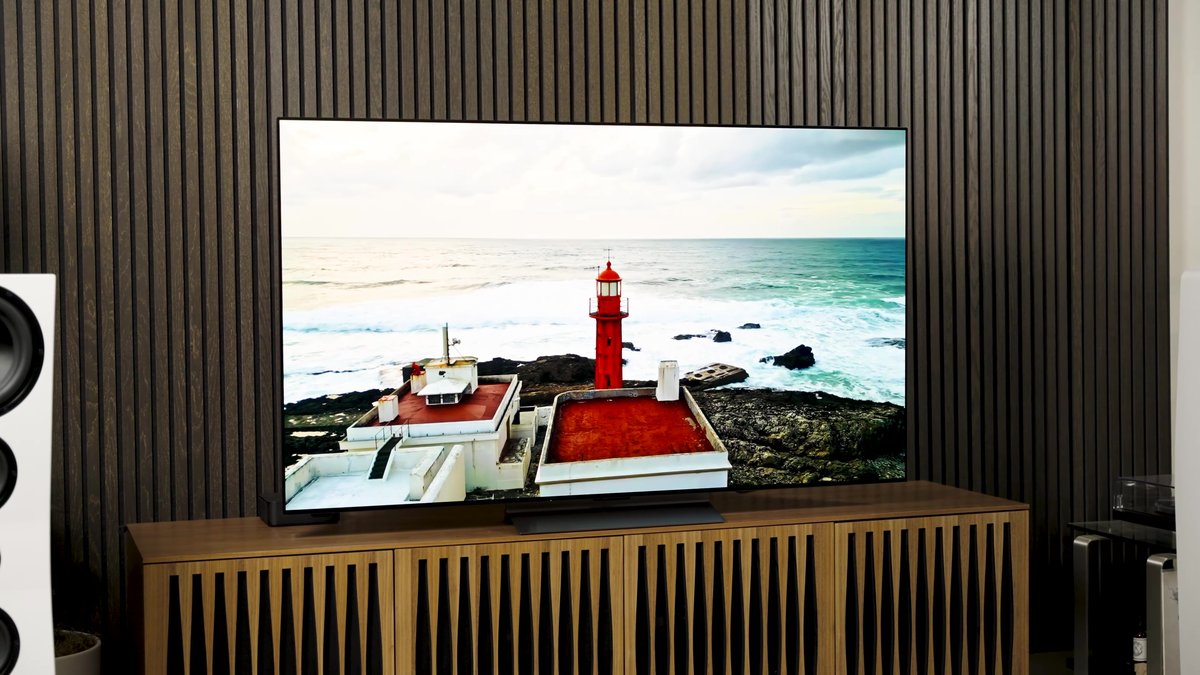
When you're eyeing a new television, the choices can feel overwhelming. Every ad promises the "best picture ever," but what does that really mean for your living room and your binge-watching habits? The question that consistently rises to the top for discerning viewers is: Is OLED Right for Your Specific Viewing Habits? It's a critical question because, while OLED TVs offer undeniably stunning visuals, they aren't a universal "best fit" for everyone. Understanding how OLED's unique strengths and weaknesses align with your daily use is the key to making a truly smart investment.
You see, a TV isn't just a gadget; it's the window to your entertainment world, whether it's the gritty realism of a prestige drama, the lightning-fast action of a competitive game, or the vibrant spectacle of a live sporting event. And like any good tool, its suitability largely depends on the job it needs to do. This guide will walk you through the nuances of OLED technology, matching its capabilities against various viewing scenarios, so you can confidently decide if it’s the right star for your home theater.
At a Glance: Is OLED Your Perfect Match?
- For the Cinephile & Movie Lover: YES. OLED's perfect blacks and infinite contrast deliver unparalleled cinematic immersion, especially in darker rooms.
- For the Dedicated Gamer: VERY LIKELY. Extremely fast response times and low input lag are a dream for competitive gaming. Burn-in risk is manageable for most.
- For Bright Living Rooms: LIKELY NOT ideal as the primary set. OLED's peak brightness struggles against direct sunlight or very high ambient light. Consider QLED/Mini-LED alternatives.
- For Sports Fans & Live TV: YES, but with caveats. Excellent motion handling, but static logos from news channels or sports tickers could be a concern over many years.
- For Wide Seating Arrangements: YES. OLED maintains picture accuracy and color integrity even from steep off-angles, perfect for large groups.
- For Budget-Conscious Shoppers (especially large screens): LIKELY NOT. OLED commands a premium price, particularly as screen sizes increase. QLED/Mini-LED offers more screen for your dollar.
- For Those Worried About "Burn-in": MODERN OLEDs have advanced mitigation, but if you frequently display static content for hours daily (e.g., news channels, game HUDs), QLED/Mini-LED might offer greater peace of mind.
Understanding the Magic Behind OLED: Pixels That Shine Solo
Before we dive into viewing habits, let's quickly demystify OLED. The acronym stands for Organic Light Emitting Diode. The magic here is that each tiny pixel on an OLED screen is its own light source. Unlike traditional LED-backlit LCD TVs (which includes QLED and Mini-LED), OLED doesn't need a separate backlight. This fundamental difference is where all of OLED's key advantages (and some of its limitations) stem from.
Because each pixel can turn completely on or off independently, OLED TVs deliver:
- Perfect Blacks: When a pixel is off, it's truly off. This isn't just "very dark gray"; it's an absence of light, creating an unparalleled sense of depth and realism in darker scenes.
- Infinite Contrast: The ratio between the brightest white and the darkest black is immeasurable because the black is absolute. This makes images pop with incredible three-dimensionality.
- Lightning-Fast Response Times: Pixels can change state almost instantly, leading to incredibly smooth motion with virtually no blur, which is a huge boon for fast-paced content.
- Ultra-Wide Viewing Angles: Since each pixel emits its own light, the picture quality, color, and brightness remain consistent even when viewed from extreme off-angles.
- Thin & Flexible Designs: No bulky backlight means OLED panels can be incredibly thin, even paper-thin in some designs.
Contrast these benefits with QLED and Mini-LED, which are evolutions of LCD technology. They use a backlight (either traditional LEDs with quantum dots for QLED, or thousands of tiny LEDs for Mini-LED) that shines through an LCD panel. While these technologies have made incredible strides in brightness and color volume, they still contend with the inherent challenge of controlling light that's coming from behind the picture. This is why even the best QLEDs, despite sophisticated local dimming, can't achieve OLED's perfect blacks, often exhibiting some "blooming" (a halo of light around bright objects on a dark background).
Your Viewing Environment: Bright Room Versus Dark Den
The single biggest factor dictating whether OLED is right for you often comes down to the ambient light in your primary viewing space.
The Sun-Drenched Living Room: Where Brightness Reigns
If your TV resides in a living room bathed in natural light, with large windows, skylights, or even just numerous lamps, you're in a "bright room" scenario. Here, the challenge is for the TV to overcome ambient light and deliver a picture that remains vibrant and visible, free from reflections or washed-out colors.
- OLED's Performance: While modern OLEDs have improved their peak brightness considerably, they still generally can't compete with the sheer luminosity of high-end QLED or Mini-LED TVs. In a very bright room, an OLED's stunning blacks might be less noticeable, and reflections can be more distracting. The picture can appear dimmer, and some of that incredible contrast gets diluted.
- QLED/Mini-LED's Advantage: This is where QLED and Mini-LED shine, quite literally. Their ability to hit incredibly high peak brightness levels allows them to cut through glare and reflections, delivering a punchy, vibrant image even in the brightest environments. HDR (High Dynamic Range) content, in particular, benefits from this extra brightness, making highlights truly sparkle. If your TV will be on during the day with blinds open, these technologies offer a more consistently impactful picture.
The Dedicated Home Theater or Dimly Lit Cave: Where Contrast is King
For those who love to draw the curtains, dim the lights, and settle in for a truly cinematic experience, a "dark room" is your domain. In this setting, the absence of ambient light allows a TV's true capabilities to fully manifest.
- OLED's Unbeatable Domain: This is OLED's undisputed playground. In a dark room, its perfect blacks become profoundly apparent. The infinite contrast creates an almost three-dimensional depth, and colors appear incredibly rich and accurate. Every shadow detail, every subtle nuance in a dark scene, is rendered with breathtaking fidelity. You get an immersive experience that QLED/Mini-LED, with their inherent backlight limitations, simply cannot replicate. For the ultimate "lights-out" movie night, OLED is the gold standard.
- QLED/Mini-LED's Challenge: While still excellent, even the best QLED/Mini-LED TVs will exhibit some degree of "elevated" blacks or blooming in a perfectly dark room. The local dimming zones, no matter how many there are, can't turn off individual pixels, so light can bleed into adjacent dark areas, slightly compromising that deep, inky blackness.
Verdict: If your primary viewing happens in a well-lit space, consider QLED or Mini-LED. If you crave cinematic perfection in a controlled, dark environment, OLED is unmatched.
Your Content, Your Choice: Matching Tech to Your Entertainment Diet
Beyond room brightness, what you actually watch and how you watch it are crucial determinants.
The Cinephile & Movie Buff: Immersive Storytelling
For those who live for cinema, who appreciate the director's vision in every frame, and who seek to replicate the theater experience at home, picture accuracy and immersive contrast are paramount.
- OLED's Excellence: Movies with lots of dark scenes, intricate shadows, or high contrast compositions (think sci-fi epics, psychological thrillers, or visually stunning dramas) truly sing on an OLED. The ability to render absolute black next to a bright highlight without compromise creates an astounding sense of depth and realism. HDR movies, in particular, benefit immensely from OLED's pixel-level control, making highlights pop against genuinely dark backgrounds. Filmmakers often master content on professional OLED monitors for this very reason.
- QLED/Mini-LED for Movies: High-end QLED/Mini-LED TVs offer incredibly vibrant colors and impressive HDR brightness, making big-budget blockbusters look spectacular. They can be a fantastic choice for those who love a bright, punchy image, especially in brighter rooms where OLED's advantages might be less apparent. However, they'll always have that slight compromise in black levels compared to OLED.
Verdict: For the purest, most immersive cinematic experience, especially with HDR content in a dimmer room, OLED is the clear winner.
The Dedicated Gamer: Speed, Responsiveness, and Visual Fidelity
Gaming demands a unique blend of visual quality, responsiveness, and often, the ability to handle static on-screen elements for extended periods.
- OLED's Gaming Prowess:
- Near-Instant Response Time: With pixel response times often under 1ms, OLED TVs virtually eliminate motion blur, making fast-paced action games incredibly fluid and clear. This is a game-changer for competitive titles.
- Low Input Lag: Modern OLEDs boast extremely low input lag, ensuring that your controller inputs translate to on-screen action almost instantaneously, which is critical for gaming performance.
- Variable Refresh Rate (VRR) & HDMI 2.1: Most high-end OLEDs come equipped with HDMI 2.1 ports and support VRR technologies (like G-Sync and FreeSync), ensuring tear-free gaming at high refresh rates (120Hz or even higher on some models).
- Gorgeous Graphics: Games, especially those with rich atmospheric lighting or dark environments, look phenomenal on OLED thanks to the perfect blacks and vibrant colors.
- QLED/Mini-LED for Gamers:
- No Burn-in Risk: This is the primary advantage for gamers who play a single game with static HUDs (heads-up displays), health bars, or maps for hundreds or thousands of hours. QLED/Mini-LED TVs simply do not suffer from burn-in.
- High Refresh Rates & Low Input Lag: Many QLED/Mini-LED models also offer excellent gaming features like 120Hz+ refresh rates, VRR, and low input lag, making them highly capable gaming displays.
- Brightness for HDR Gaming: HDR games can look stunningly bright and impactful on QLED/Mini-LED, especially in well-lit gaming rooms.
- The Burn-in Question for Gamers: This is the elephant in the room. While modern OLEDs have sophisticated pixel refresh cycles, logo dimming, and pixel shifting technologies to mitigate burn-in, it remains a potential risk with extreme, prolonged static content. If you exclusively play one game for thousands of hours with a bright, static HUD, a QLED/Mini-LED might offer greater peace of mind. For most gamers who play a variety of games and watch other content, the risk is very low and manageable.
Verdict: For competitive gamers prioritizing pure speed and visual fidelity across diverse games, OLED is arguably superior. If burn-in is a genuine anxiety due to hyper-specific, long-term static gaming habits, QLED/Mini-LED offers a safer bet without sacrificing much in terms of gaming performance. To learn more about optimizing your display for gaming, you might find our guide on the best gaming TVs helpful.
The Sports Fanatic & Live TV Watcher: Fast Action, Static Logos
Watching live sports, news, or daytime TV involves fast-moving action but also often includes static scoreboards, news tickers, or channel logos that remain on screen for extended periods.
- OLED for Sports: OLED's incredible motion handling is fantastic for sports. Fast-moving balls, quick cuts, and rapid player movements are rendered with exceptional clarity and minimal blur. You'll catch every detail of that winning goal or crucial play. Colors, like the green of the pitch or the vibrant team jerseys, look true to life.
- QLED/Mini-LED for Sports: These TVs also offer excellent motion handling, especially models with high native refresh rates. Their brighter peak luminosity can be a huge advantage if you're watching a daytime game in a bright room, ensuring the action remains vivid and punchy.
- The Static Content Concern: Here's the potential catch for OLED with live TV and sports: news channels, in particular, often have persistent tickers and station logos that are on screen for hours. Similarly, sports broadcasts can have static score overlays. While modern OLEDs have burn-in mitigation, consistently displaying these bright, static elements for years could theoretically lead to issues. For casual viewing, it's unlikely to be a problem, but if your TV is predominantly a 24/7 news ticker display, it's worth considering.
Verdict: Both technologies excel at sports. If your viewing habits involve a lot of static logos for prolonged periods (e.g., leaving a news channel on all day), QLED/Mini-LED might offer more peace of mind regarding burn-in. Otherwise, OLED's motion clarity is superb.
The Everyday Viewer & Mixed Content
Most households fall into this category: a mix of streaming movies, casual gaming, live TV, and maybe some YouTube or social media mirroring.
- OLED for Mixed Use: An OLED TV can deliver a stunning experience across the board. Movies look fantastic, gaming is a joy, and general TV viewing is crisp and vibrant. The key consideration here is still the room's ambient light and the comfort level with the (albeit low) burn-in risk. For many, the overall picture quality benefits outweigh these minor concerns.
- QLED/Mini-LED for Mixed Use: These TVs are incredibly versatile. They handle bright rooms beautifully, offer excellent performance for all types of content, and come without the burn-in concern. For a do-it-all TV in a moderately to brightly lit space, a high-end QLED or Mini-LED offers fantastic value and performance.
Verdict: For truly mixed usage, both are strong contenders. Your room brightness and budget will likely be the tie-breakers.
The Elephant in the Room: OLED Burn-in – Should You Worry?
Burn-in is arguably the most persistent concern associated with OLED technology. Let's tackle it head-on.
What is Burn-in?
Burn-in (or permanent image retention) occurs when static elements are displayed on an OLED screen for extremely long, continuous periods, causing those pixels to degrade slightly faster than their neighbors. This can leave a faint, permanent "ghost image" on the screen. Think news tickers, game HUDs, or network logos.
Is it Still a Major Problem with Modern OLEDs?
In short: for the vast majority of users, no. Manufacturers have implemented several sophisticated technologies to virtually eliminate burn-in under normal viewing conditions:
- Pixel Shift: The entire image subtly shifts by a few pixels every few minutes, imperceptible to the viewer, ensuring no single pixel is continuously illuminated for too long in the exact same pattern.
- Logo Dimming: The TV automatically detects static logos (like channel IDs) and slightly dims those specific areas to reduce pixel wear.
- Screen Refresh/Pixel Cleaning: Periodically (often automatically when the TV is off for a few hours), the TV runs a "pixel refresh" cycle. This runs a uniform current through all pixels to even out wear and tear.
- Improved Materials: The organic materials used in OLED panels themselves have become more durable and resistant to degradation.
Who Should Still Be Cautious?
While the risk is low for most, if you fall into these categories, it's worth a moment's pause: - Commercial Use: If you're using an OLED as a public display in a restaurant showing a menu all day, or as a continuous news feed display, that's the kind of extreme static use where burn-in could still be a factor.
- Extreme Gamer (Single Game Focus): As mentioned, if you play one specific game for thousands of hours annually with a consistently bright, static HUD, it could theoretically become an issue over many years.
- 24/7 News Channel Viewer: Similarly, if your TV is literally always on a news channel with a ticker, for years on end, the risk exists.
For the Average Consumer:
If you watch a variety of content – movies, TV shows, sports, play different games – and don't leave your TV on a single static image for 8-10+ hours a day, every single day, for years, burn-in is highly unlikely to be an issue. Think of it like an older plasma TV; it was a concern, but for most people, it never materialized. Modern OLEDs are incredibly resilient. Many manufacturers even offer warranties that cover burn-in on their premium models, which speaks to their confidence in the technology.
Verdict: Don't let burn-in deter you from OLED unless your use case is genuinely extreme and static-heavy. For a balanced viewing diet, the risk is minimal.
Beyond the Picture: Design, Price, and Future-Proofing
While picture quality is paramount, other practical considerations also weigh into your decision.
Aesthetics and Build Quality: Sleek vs. Sturdy
- OLED's Design Edge: Thanks to the absence of a backlight, OLED panels are famously thin, often impossibly so at their edges. This allows for incredibly sleek, minimalist designs that can look like a piece of art on your wall or stand. The lightweight nature also makes wall-mounting easier. However, this thinness can also mean the panels are a bit more delicate than their backlit counterparts.
- QLED/Mini-LED's Sturdiness: While not as impossibly thin as OLEDs, QLED/Mini-LED TVs can still boast attractive, modern designs. Their added bulk from the backlight can also translate to a slightly more robust, less fragile build, which might be a plus for families with active kids or pets.
The Price Tag: Is the Premium Worth It?
- OLED's Premium Position: Generally, OLED TVs occupy the higher end of the pricing spectrum. You're paying for cutting-edge technology, pixel-perfect control, and often, the associated premium features. As screen sizes increase, the price premium for OLED tends to grow more steeply than for QLED/Mini-LED.
- QLED/Mini-LED's Value Proposition: These technologies offer a broader range of price points. You can find excellent value, especially if you're looking for larger screen sizes without breaking the bank. For a "bigger screen for the dollar," QLED and Mini-LED often win, providing fantastic picture quality at a more accessible price point for many consumers. For a deeper dive into the cost aspect, check out our super pillar article, Is OLED TV worth it?.
Connectivity & Smart Features: A Level Playing Field
In terms of smart TV platforms, connectivity options (HDMI 2.1, Wi-Fi 6, etc.), and sound quality, both high-end OLED and QLED/Mini-LED TVs generally offer an excellent, comparable experience. Most major brands integrate their best smart TV operating systems (like Google TV, webOS, Tizen) across their premium lines, regardless of panel technology.
Making the Smart Buy: Key Questions to Ask Before You Commit
To consolidate your decision, consider these practical steps:
- Assess Your Room: Is it bright during the day? Can you control the ambient light (curtains/blinds)? This is perhaps the most critical factor.
- Analyze Your Content Diet: Are you a movie marathoner, a dedicated gamer, a sports fanatic, or a general viewer? What types of content do you watch most?
- Gauge Your Burn-in Comfort Level: Based on your content and viewing patterns, how concerned are you about the (low) risk of burn-in? Is the peace of mind worth potentially compromising on perfect blacks?
- Set Your Budget: How much are you truly willing to spend? Remember that larger OLED screens come with a significant premium.
- Visit a Store (with Your Content!):
- Bring a USB stick with some of your favorite movie clips (especially dark scenes), game footage, or even bright, colorful landscapes.
- Ask to see the TVs in different lighting conditions. Many stores have a "theater" room where you can see OLED in its natural habitat (a dark room).
- Pay attention to reflections. In a store's bright environment, you'll get a good sense of how reflective the screen is.
- Look at uniformity. Ask for a gray or black screen to check for any clouding or unevenness, especially on QLED/Mini-LED models.
- Review Refresh Rates and HDMI 2.1: If gaming is a priority, ensure the TV supports 120Hz refresh rates and has at least two HDMI 2.1 ports for next-gen consoles or PCs.
- Check Warranty Details: Especially for OLED, ask about the manufacturer's warranty regarding burn-in.
The Bottom Line: Who Wins in Your Living Room?
Ultimately, the "best" TV isn't about which technology is superior on paper; it's about which technology is superior for you.
Choose OLED if:
- You're a cinephile who prioritizes unparalleled contrast, perfect blacks, and cinematic immersion, especially for HDR content.
- You primarily watch TV in a dimly lit room or a dedicated home theater.
- You're a dedicated gamer who craves instant response times, fluid motion, and stunning graphics across a variety of titles, and you're comfortable with the minimal burn-in risk.
- You value a sleek, ultra-thin design and wide viewing angles for flexible seating.
- Your budget allows for a premium investment, and you're not solely focused on getting the largest screen possible for the lowest price.
Choose QLED or Mini-LED if: - Your primary viewing space is a bright living room with lots of ambient light or direct sunlight.
- You prioritize maximum peak brightness and vibrant, punchy colors, especially for HDR content that truly pops.
- You're a gamer who plays a single game with static HUDs for extreme durations, and burn-in anxiety is a major factor.
- You're looking for excellent performance at a more accessible price point, particularly for larger screen sizes.
- You need a more rugged and durable TV for a high-traffic area.
Both OLED and QLED/Mini-LED represent the pinnacle of modern display technology, offering breathtaking picture quality far beyond what was possible just a few years ago. By honestly assessing your viewing habits, room conditions, and priorities, you can cut through the marketing noise and choose the TV that will bring you the most joy and immersion for years to come.